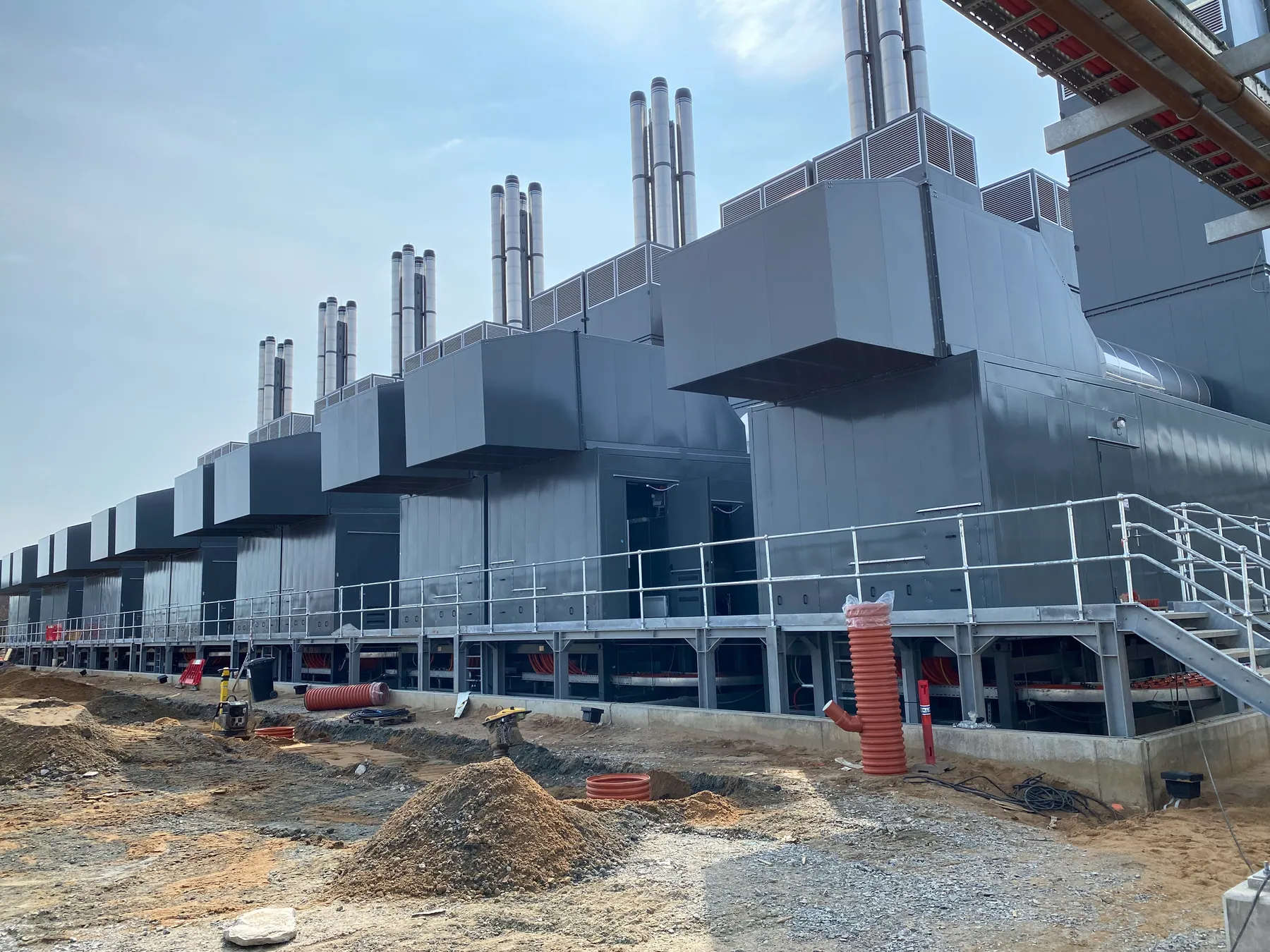
Knowledge page · Standby power
Generator plants for standby power and critical supply
How a generator plant works, how it is selected to ISO 8528, sized for your load and installed so it starts when it matters – and which rules apply in Denmark.
Understand the plant
What a generator plant consists of, how it starts and which versions exist.
In short
What is a generator plant?
A generator plant is a combustion engine driving a synchronous generator. For standby power it starts automatically when the grid fails and supplies the building as long as there is fuel.
Together with a UPS it forms a standby power chain: the UPS holds the critical load for the seconds the engine needs to start, and the generator then provides the long autonomy.
Design
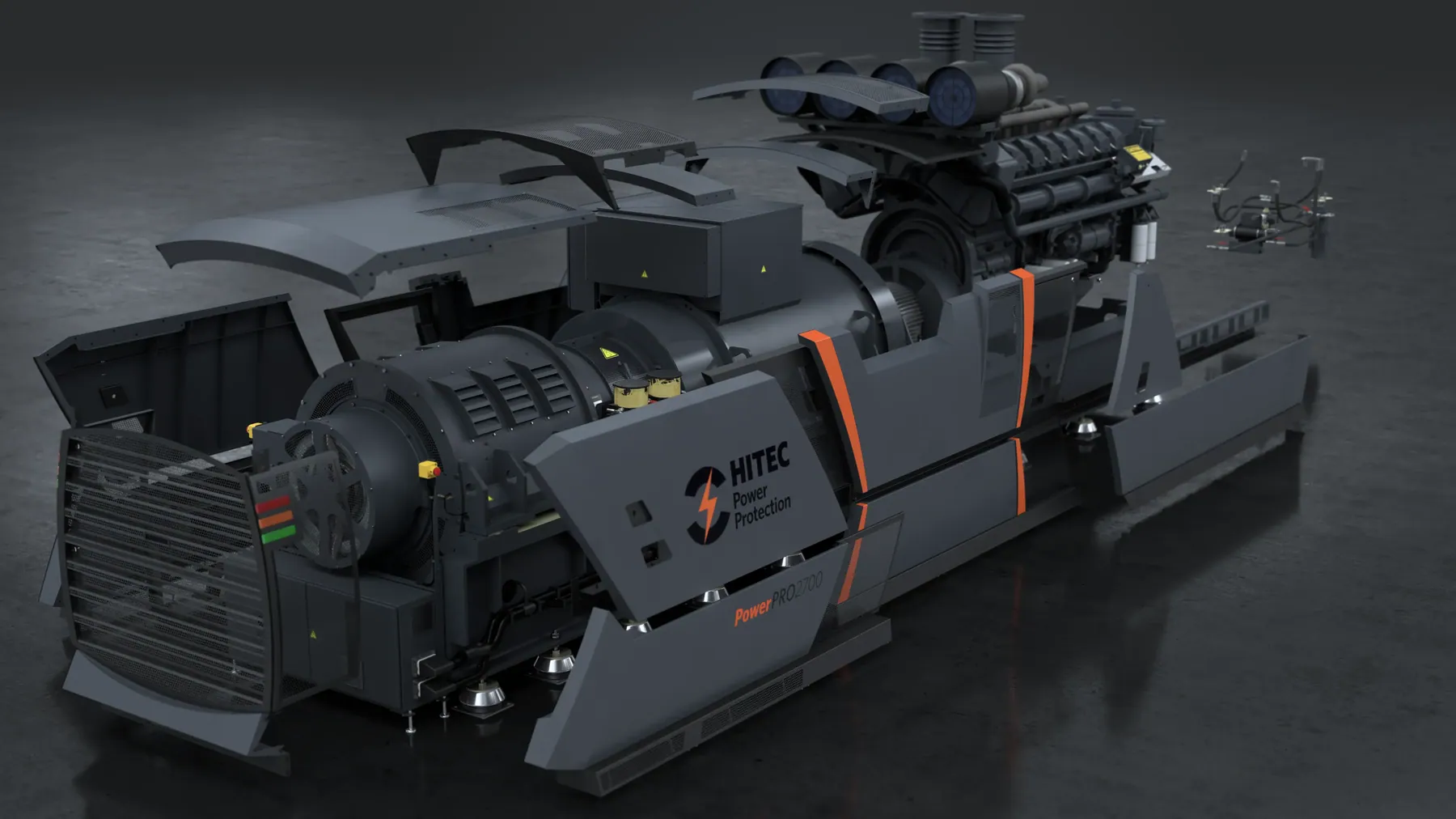
What a generator plant consists of
Click the points to see the main components. Below the image are the auxiliary systems that decide whether the plant actually starts.
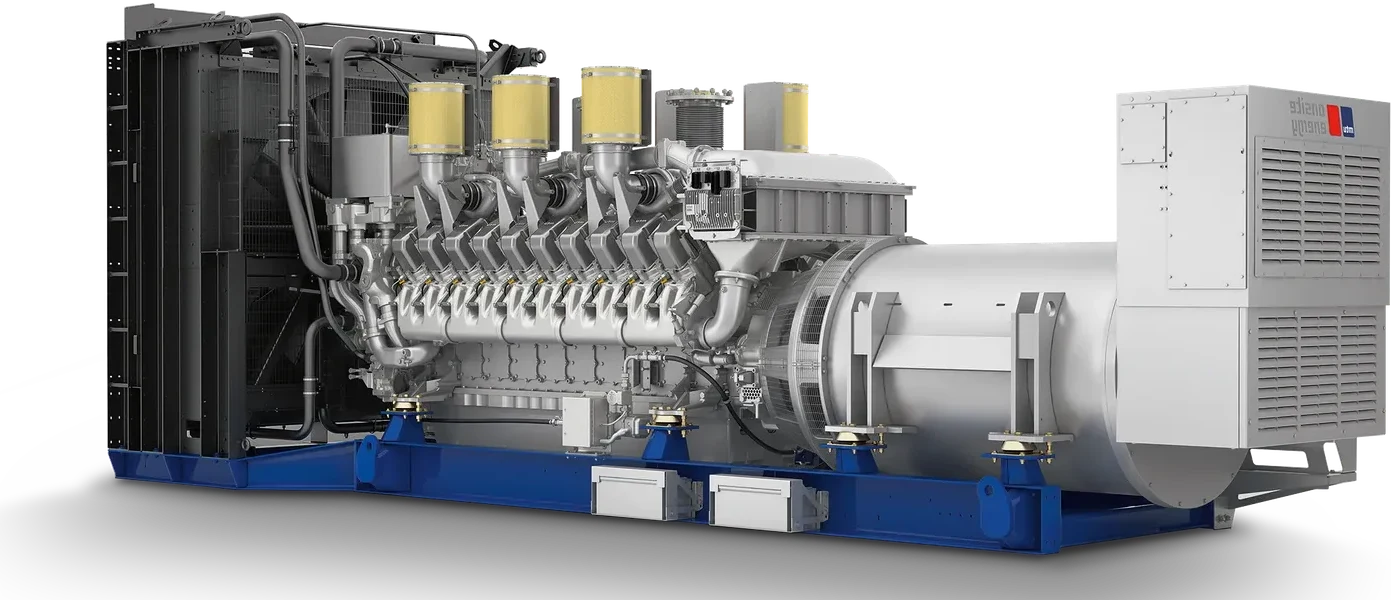
Removes the engine heat. Sized for the room air flow and the highest outdoor temperature.
Delivers the shaft power. The governor keeps the speed – and thus the frequency – constant when the load changes.
The synchronous alternator converts the shaft power into electricity. The voltage regulator (AVR) holds the voltage.
- Starting systemStarting batteries with charger and coolant preheating, so the engine can take load immediately.
- ControlsStarts the plant on mains failure, monitors the engine and synchronises several sets.
- Fuel systemDay tank, main tank, pumps and filters.
Start sequence
From mains failure to running on generator
When the controls detect a mains failure, they give a start signal. The engine starts, and once voltage and frequency are stable, the transfer switch moves the load across. A diesel generator plant can typically take full load within approx. 10 seconds. The critical load is on the UPS in the meantime.
- 1Mains failure
The UPS battery takes over the critical load immediately.
- 2Start signal
The controls confirm the outage and start the engine.
- 3Stable voltage and frequency
The generator is ready to take load.
- 4Transfer
The load moves to the generator – typically approx. 10 s after the outage.
Versions
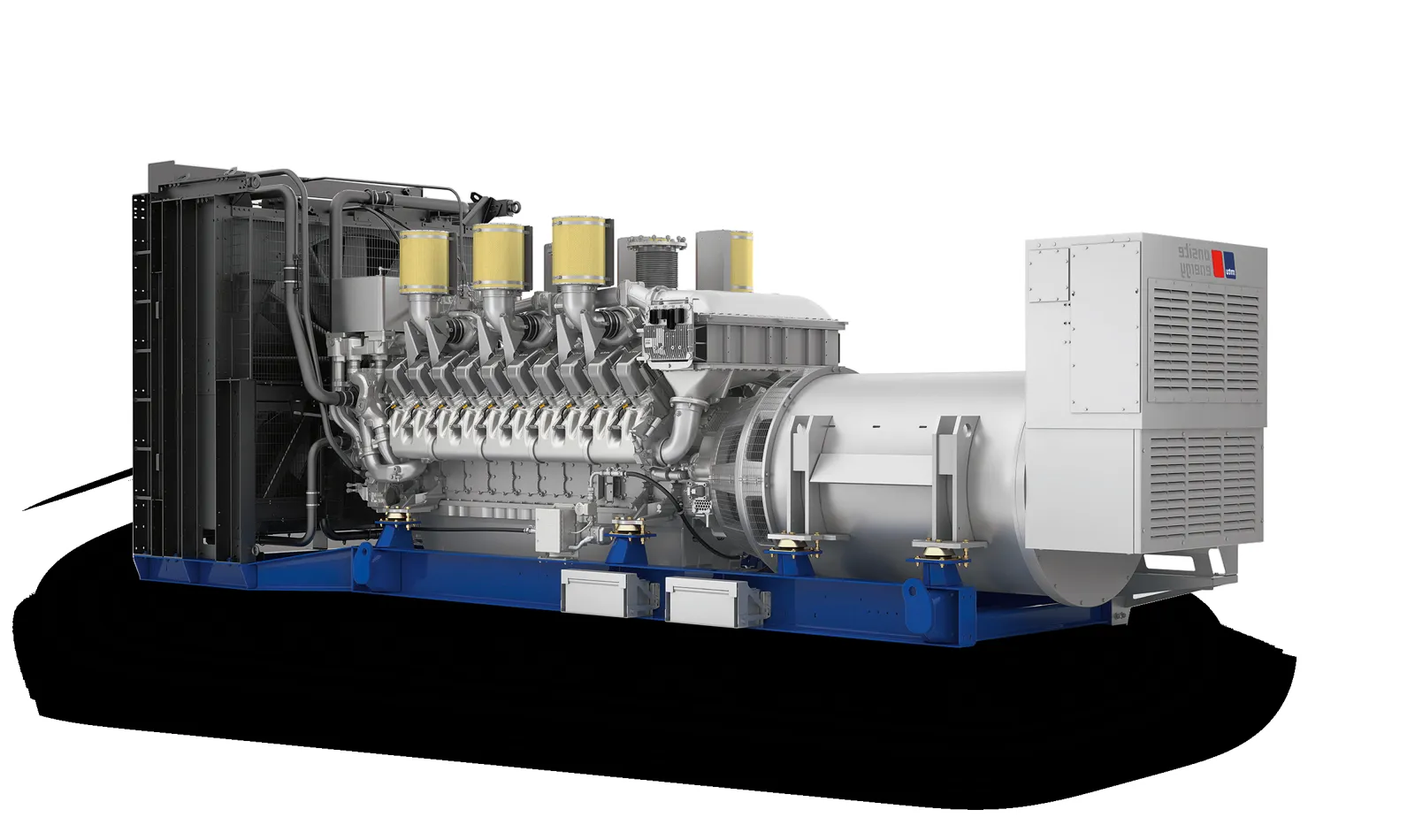
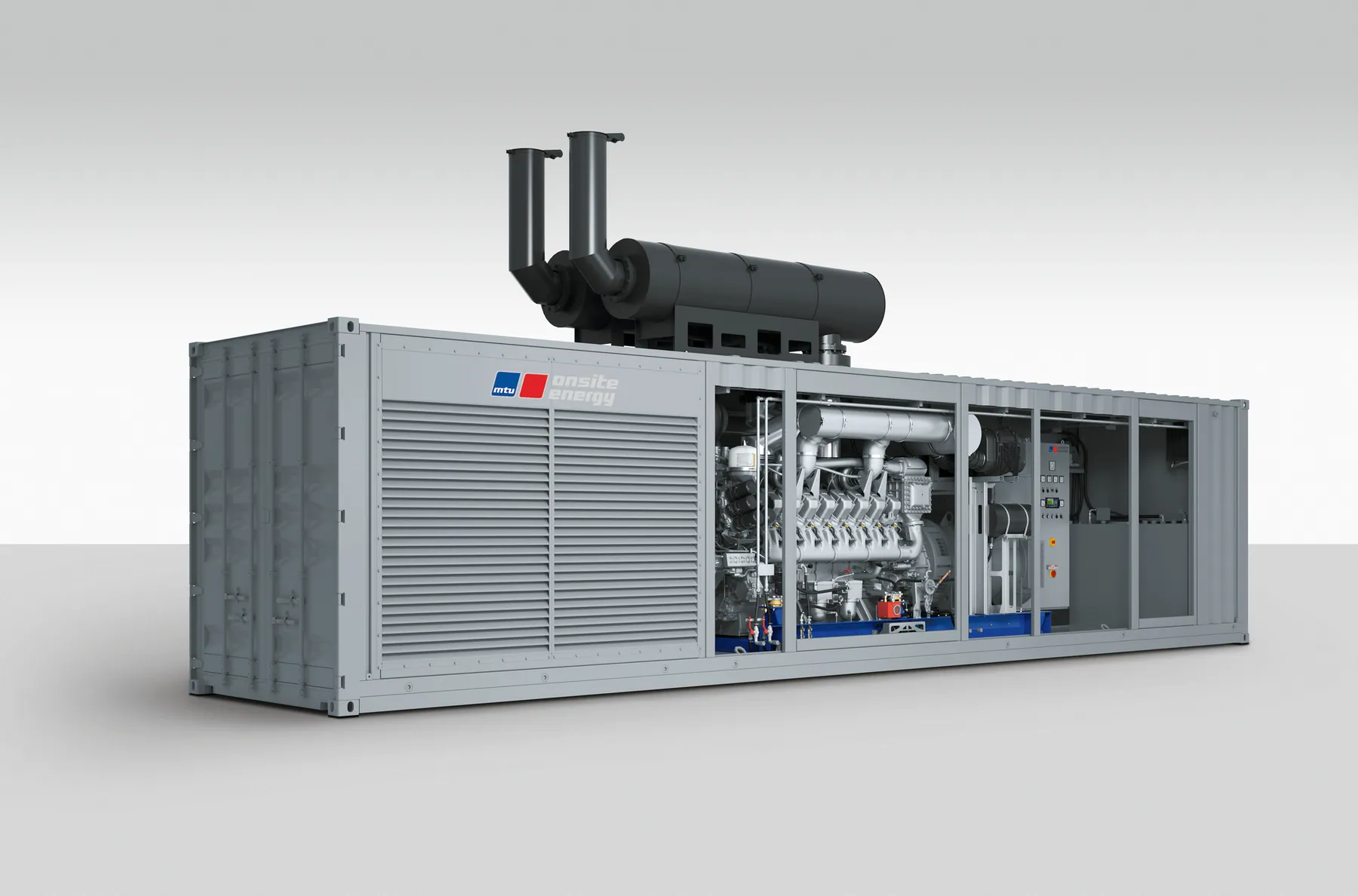
Open, container or canopy?
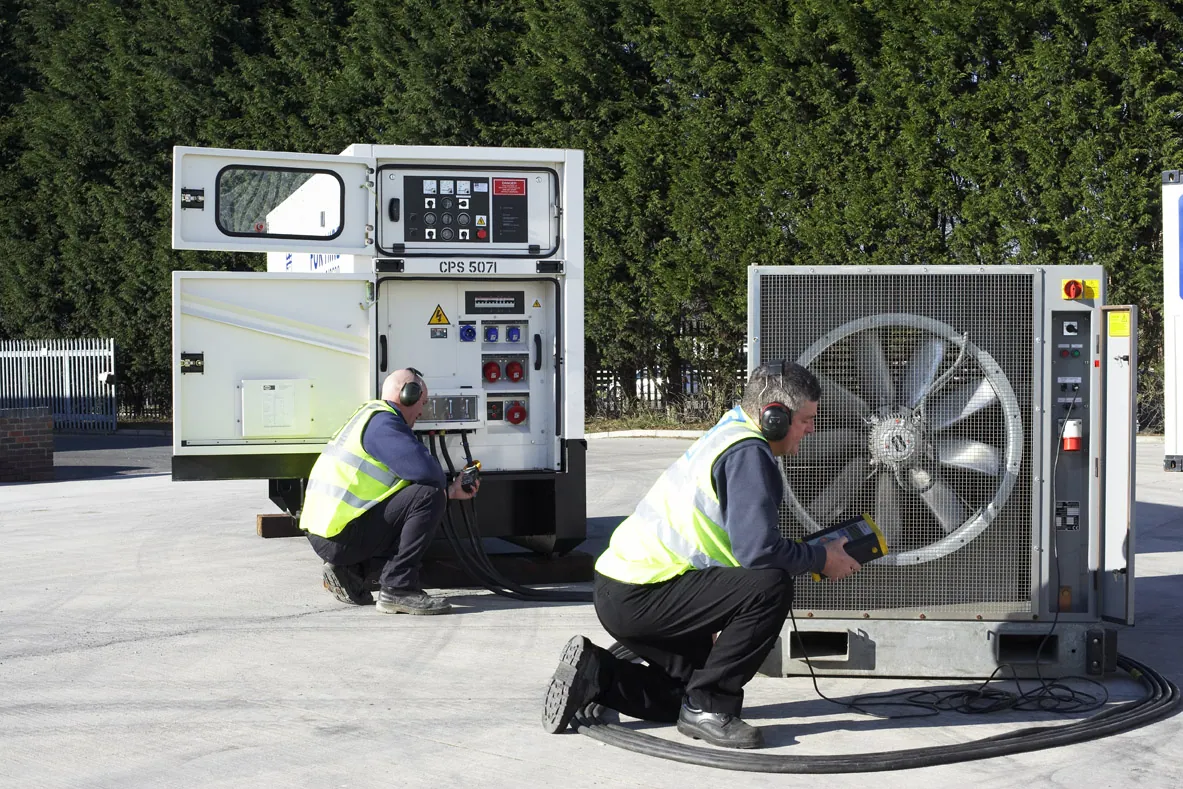
Choose correctly
The classes that decide how hard the plant may be loaded and how stable the power is – and how the size is found.
Ratings
ESP, PRP or COP – ISO 8528-1
The same set has a different rated power depending on the class. A set bought for standby power (ESP) must not be used as a permanent supply. Some manufacturers also have a data centre class (DCP) that allows unlimited running at variable load.
ESP
Emergency Standby Power- Load
- Variable
- Hours
- Up to 200 h/year
LTP
Limited-Time running Power- Load
- Constant
- Hours
- Up to 500 h/year
PRP
Prime Rated Power- Load
- Variable
- Hours
- Unlimited
COP
Continuous Operating Power- Load
- Constant
- Hours
- Unlimited
Source: ISO 8528-1 via Cummins.
Performance class
G3: stable enough for UPS and electronics
ISO 8528-5 divides sets into performance classes G1 to G4 by how far voltage and frequency may deviate when the load steps. G3 is the strictest standard class: the voltage may fall at most 15% and rise 20%, and must recover within 4 seconds.
The class only applies at the standard’s own load steps. If the project requires other load steps, it is class G4 – and the requirement must be agreed with the manufacturer.
- UPS – critical load400 kW
- Cooling250 kW
- Ventilation, lighting and pumps90 kW
- Battery charging60 kW
- Total load800 kW
Sizing
How to find the size of the plant
S = P / cos φ
- 01Load scheduleAll loads to be supplied in kW – including the UPS battery charging after an outage.
- 02kW to kVAGenerator sets are rated at power factor 0.8. Lower power factor requires a larger alternator.
- 03Motor startingMotors can draw six times full-load current when starting. Staggered or soft starting reduces the requirement.
- 04UPS loadRectifier harmonics and leading power factor affect the generator. Tell the supplier the UPS will be fed from a generator.
- 05Minimum loadCummins advises against running below 30% load. An oversized plant causes light-load problems.
Install and supply
Fuel, HVO, the room around the plant and the rules that apply in Denmark.
Fuel and autonomy
The tank decides how long you run
According to its data sheet, an mtu 20V4000 DS4000 uses approx. 818 litres of diesel an hour at full load and approx. 598 litres at 75% load. The tank size follows directly from the run time the contingency plan requires:
Tank (l) = consumption (l/h) × run time (h)
Rolls-Royce has approved mtu Series 1600 and Series 4000 generator sets for HVO to EN 15940 without engine or system modifications. Diesel and HVO age; the fuel must be checked and cleaned if necessary.
Room and installation
Air in, heat and exhaust out
A generator plant converts only part of the fuel energy into electricity. The rest must leave as hot air and exhaust. A room that cannot get rid of the heat makes the plant derate – or stop.
- 1Combustion and cooling air
The air inlet is sized for the engine’s combustion air and the radiator air flow at full load and the highest outdoor temperature.
- 2Exhaust
Flue with silencer above the roof or away from air inlets, windows and ventilation.
- 3Radiator and hot air out
The hot air must leave without being drawn back in – otherwise the temperature rises and the plant must derate.
- 4Day tank and main tank
Diesel storage follows the Danish Emergency Management Agency’s technical regulations for flammable and combustible liquids.
- 5Transfer switch and connection
Automatic transfer switch (ATS) between mains and generator, sized for the plant’s full capacity.
Rules and standards
What the plant must comply with
- BEK 1408/2023Medium combustion plants
Emergency plants from 1 MW thermal input running at most 500 hours a year are exempt from a number of emission limit values. Operating hours must be documented.
- BEK 1639/2016Flammable liquids
The Danish Emergency Management Agency’s technical regulations for storage of diesel and other combustible liquids.
- ISO 8528Generating sets
Ratings (part 1), performance and load steps (part 5) and test methods (part 6).
- EN 15940HVO
The standard for paraffinic diesel, including HVO. The engine must be approved by the manufacturer.
Test and operate
How the plant is documented and kept ready – and how it works with UPS and DRUPS.
Testing and service
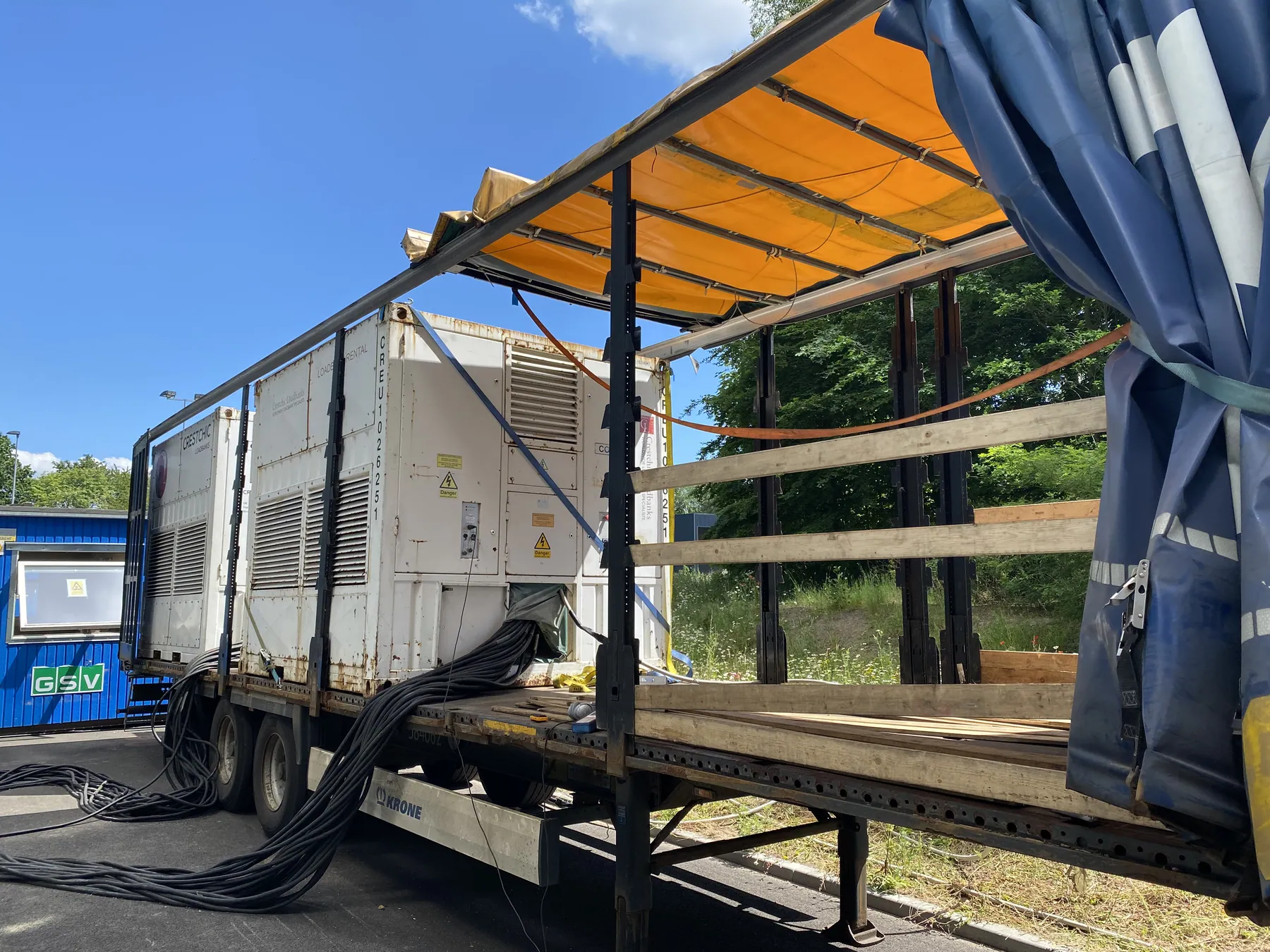
A plant not tested under load is not documented
Weekly no-load test runs keep the engine at light load. Over time this causes soot and unburnt fuel in the exhaust. A load bank test shows that the plant delivers its full power and burns off the deposits.
- 01Load testFull load with load bank – power, temperature and voltage documented
- 02Black startSimulated mains failure with start, transfer and return
- 03Starting systemStarting batteries, charger and preheating
- 04FuelQuality, water, filters and tank level
- 05Cooling and airCoolant, radiator, louvres and air paths
- 06ControlsAlarms, event log and synchronisation
Our partner Bluecircle rents out load banks and carries out load tests: Load bank rental.
Alternatives
Generator, DRUPS or fuel cell?
At large ratings, UPS and generator can be combined in one machine – a DRUPS – without batteries. At small ratings, where noise and exhaust are unacceptable, a fuel cell can replace the generator.
FAQ
Questions and answers about generator plants
Can’t find the answer? Give us a call.
+45 50 53 13 17What is a generator plant?
A generator plant is a combustion engine coupled to a generator that supplies power when the grid fails – or as the primary supply where there is no grid. For standby power, the plant also includes controls, fuel system, cooling, exhaust and an automatic transfer switch.
How fast does a standby generator start?
A diesel generator plant can typically take full load within approx. 10 seconds. Critical loads are therefore supplied from a UPS that bridges until the generator has taken over.
What do ESP, PRP and COP mean?
They are rating classes under ISO 8528-1. ESP (Emergency Standby Power) is standby power with variable load and up to 200 operating hours a year. PRP (Prime Power) is variable load with no limit on hours. COP (Continuous Operating Power) is constant load with no limit. The class decides how hard the plant may be loaded.
What is performance class G3?
ISO 8528-5 divides generator sets into classes G1 to G4 by how much voltage and frequency may vary on load steps. G3 is the strictest standard class, with e.g. at most −15% and +20% voltage deviation and recovery within 4 seconds. It is typically required for UPS systems and electronics.
How large should the generator plant be?
The sum of the loads to be supplied – UPS, battery charging, cooling, ventilation and pumps – converted to kVA with the power factor, plus margin for motor starting and load steps. The harmonic currents and leading power factor of UPS systems must be included.
How much diesel does a generator plant use?
According to its data sheet, an mtu 20V4000 DS4000 uses approx. 818 litres an hour at full load and approx. 598 litres at 75% load. The tank size is calculated from the consumption and the run time the contingency plan requires.
Can a generator plant run on HVO?
Yes, if the engine is approved for it. Rolls-Royce has approved mtu Series 1600 and Series 4000 generator sets for HVO to EN 15940 without modification.
Must a standby plant meet emission limits?
In Denmark, medium combustion plants (from 1 MW thermal input) that serve as emergency plants and run at most 500 hours a year are exempt from a number of emission limit values in the order on medium combustion plants. The operating hours must be documented.
Why should the generator plant be tested with a load bank?
If a diesel engine runs for long periods at light load, soot and unburnt fuel build up in the exhaust (wet stacking). A load bank test documents that the plant delivers full power and burns off the deposits.
Do you have a project or a system that needs service?
Send us the load, required autonomy and voltage level – or describe the task. We will come back with a solution sized for your operation.