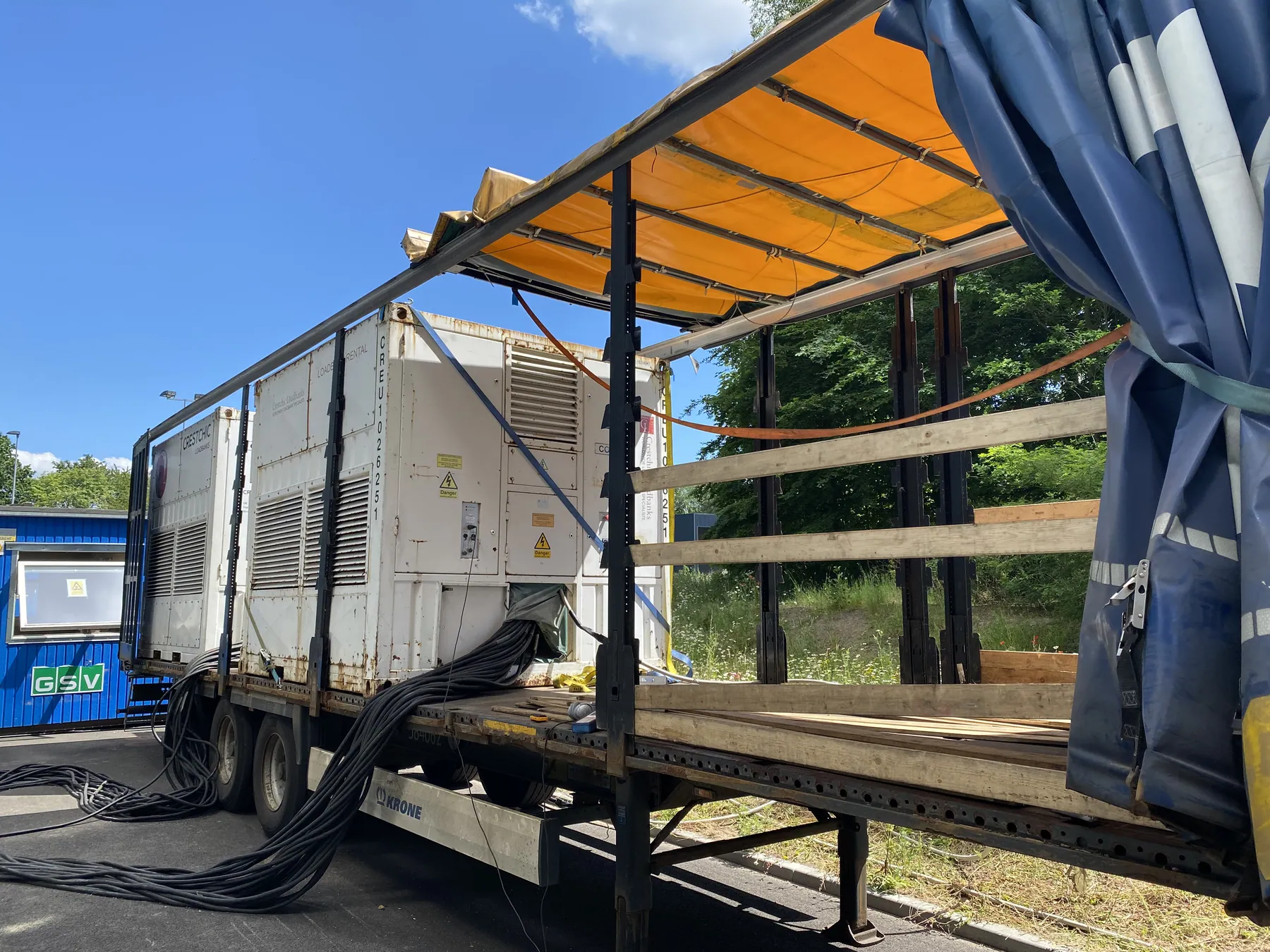
Knowledge page · Load bank testing
Load bank testing
An emergency power system is only proven once it has run at full load. Here is why a no-load test start is not enough, how the test is done for generator plants and UPS, and what must be ready on site.
Why
What happens to a system that never runs under real load.
Wet stacking
An engine without load does not burn clean
If a diesel engine runs without load or lightly loaded, it never gets hot enough to burn the fuel completely. Unburnt fuel and soot build up in the exhaust – this is called wet stacking. Cummins defines it as a condition that can occur below 30 % of the standby rating.
So the weekly no-load start shows that the engine starts – but it can itself make the problem worse. Kohler therefore recommends loading the plant, typically with a load bank, so the engine reaches operating temperature.
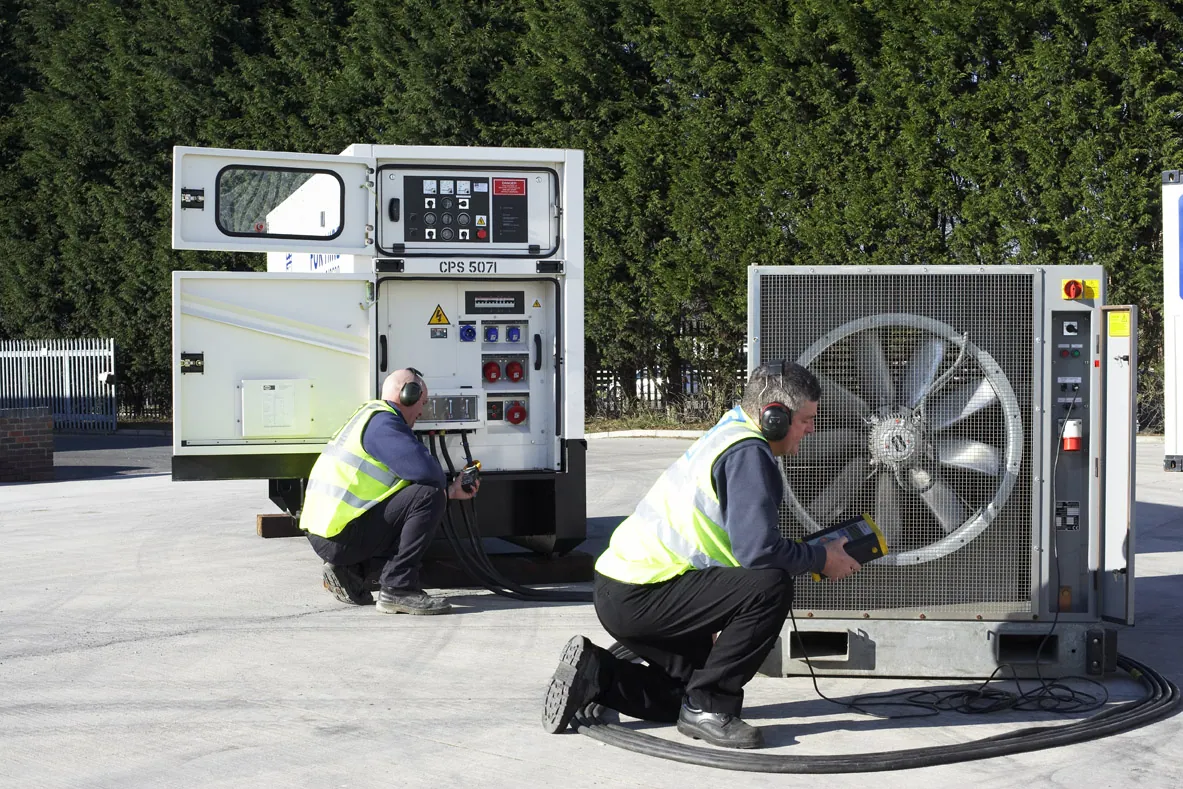
Three ways to test
Only one shows full rating without risk
A real mains failure tests the chain, but only with whatever load happens to be on – and with the critical load at stake. A load bank test runs the plant to full rating while operations continue.
| Test | Shows | Risk |
|---|---|---|
| No-load test start | That the engine starts | None – but risk of wet stacking |
| Real mains failure | That the chain works with the current load | The critical load is at stake |
| Load bank test | Full rating, documented | None – the critical load runs as normal |
The test
How the test is built up for generator plants and UPS, and what is documented.
Test sequence
The load is increased in steps
The test starts low and increases in steps, so each load level can be recorded and any faults show before the plant is fully loaded. The sequence differs for generator plants and UPS – choose one and see the difference.
The load is increased in steps up to full rating and held until temperatures and pressures are stable. The engine reaches operating temperature, and deposits from no-load running are burnt off.
The UPS is loaded at 25, 50, 75 and 100 % – the load points IEC 62040-3 uses for efficiency. Then the mains is disconnected so the battery carries the load, and the autonomy is measured.
Measurements
What the report documents
During the test Norwerk records both the electrical values and the engine’s operating data. After the test a report with all readings is delivered, documenting that the plant has delivered full rating within normal limits.
| Area | Measured |
|---|---|
| Electrical | Voltage, current, frequency, kW, kVA and power factor |
| Engine | Oil pressure, coolant temperature, fuel pressure and exhaust |
| UPS | Efficiency at each load point, transfer to battery and discharge time |
| Report | All readings documented – for operations, audit and insurance |
The equipment
Which load bank to use, and what the site must provide.
Loadbanks
Resistive or resistive-reactive?
A resistive load bank applies pure active power (kW). That is enough to test the engine and a UPS. The generator is rated in kVA at power factor 0.8 – to test it at full rating requires a resistive-reactive load bank that also draws reactive power.
Norwerk supplies resistive load banks from 100 kW, combined resistive and reactive units up to 6,000 kVA, DC load banks up to 240 V and transformers for testing at higher voltage.
Preparation
What must be ready on the day
A load bank converts all the tested power into heat. A test of 1 MW therefore needs room to blow away 1 MW of hot air. Norwerk reviews the site beforehand and handles planning, connection, execution and report.
- 1ConnectionConnection point with breaker for the load bank
- 2CablesCable route from plant to load bank
- 3Space and airThe load bank turns the power into heat
- 4FuelEnough diesel for the whole test at full load
- 5BarriersSafe area around hot air and cables
FAQ
Questions and answers about load bank testing
Can’t find the answer? Give us a call.
+45 50 53 13 17What is a load bank test?
A test in which a generator plant or a UPS is loaded artificially with a load bank instead of the real load. The system can then run up to full rating and be documented without putting the critical load at risk.
What is wet stacking?
Unburnt fuel and soot that build up in the exhaust when a diesel engine runs without load or lightly loaded. Cummins defines it as a condition that can occur when running below 30 % of the standby rating.
Why is a weekly test start not enough?
A no-load start shows that the engine starts, but not that the plant can deliver full power. On the contrary, it can cause wet stacking. Only a test under load shows that the whole system works as designed.
What is the difference between a resistive and a resistive-reactive load bank?
A resistive load bank applies pure active power (kW). A resistive-reactive load bank adds reactive power so the generator can be tested at its full kVA rating at power factor 0.8 – as it is designed for.
What is measured during the test?
Voltage, current, frequency and power on the generator – and the engine’s oil pressure, temperatures and fuel pressure. On a UPS, efficiency at different load points and battery discharge time are also measured. Everything is documented in a report.
Does the test affect normal operation?
No. The load bank is connected to the system output instead of the real load, so the critical load is supplied as normal during the test.
Do you have a project or a system that needs service?
Send us the load, required autonomy and voltage level – or describe the task. We will come back with a solution sized for your operation.